
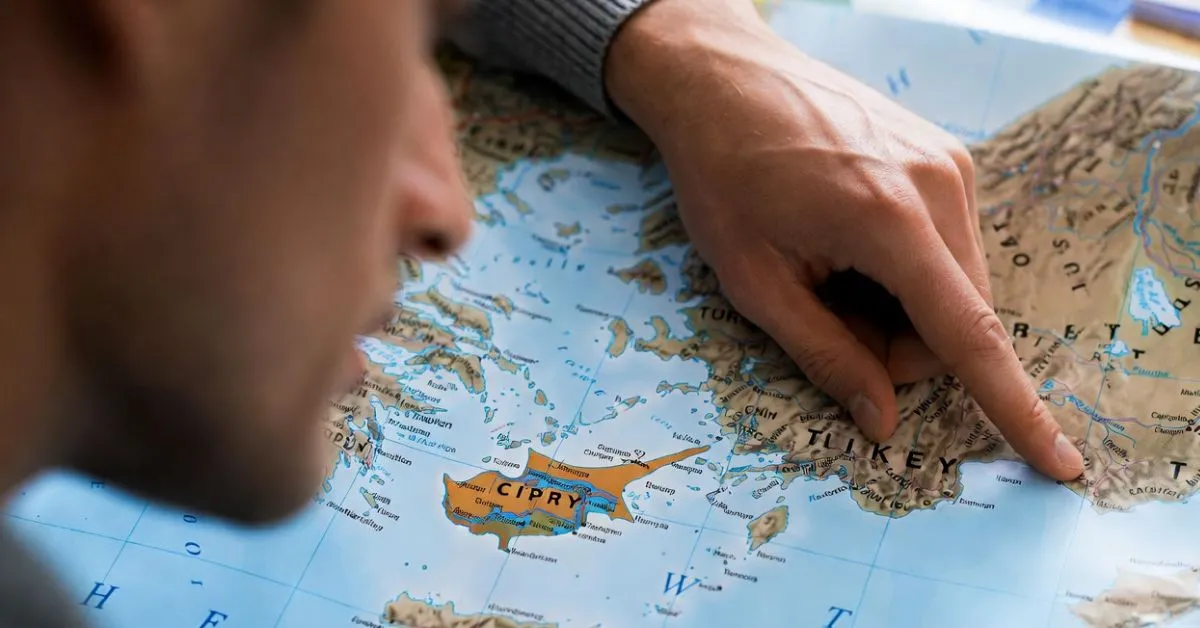
Staring at a map and wondering why Cyprus gets labeled as European even though it’s hugging Asia? Totally get it — geography says Asia, but EU membership, that Greek vibe, and what’s happening right now in 2026 with the EU Presidency and the big Schengen push make it feel like home in Europe. Come on, let’s unpack this together without the stuffy bits.
You know that moment when you’re scrolling through a map or chatting with someone about holidays and Cyprus pops up? Suddenly everyone’s like, wait a second, is that Europe or what? It’s happened to me with friends planning trips — they send a screenshot and go, “Help, I’m confused!” And honestly, it’s a fair puzzle. This island’s got this whole split personality thing going on: one side of the argument is pure map logic, the other is how people actually live, vote, and party there.
The short version that usually clicks for folks is pretty straightforward when you lay it out casually. Cyprus sits geographically smack in Asia — West Asia to be precise — and it’s way nearer to Turkey and Syria than it is to the main chunk of Europe like Italy or Greece. But switch to the politics and culture side, and boom, it’s all in on Europe: full-on EU member since 2004, euros in pockets since 2008, and this deep Greek heritage that feels like it’s always been part of the European family tree.
Then there’s the division since 1974 that’s still messing with things, keeping full unity tricky. And hey, fast-forward to right now in 2026 — Cyprus in Europe is literally running the show as EU Council President for the first half of the year under this cool motto “An Autonomous Union. Open to the World,” while they’re really gunning for that Schengen join-up, which would make getting there from other European spots feel effortless. Overall, it’s like Cyprus decided ages ago to be the bridge — Europe, Asia, Africa, they’ve all left bits of themselves here over thousands of years.
Geographical Location of Cyprus
Alright, let’s get the basics down first because that’s usually where the head-scratching starts. Cyprus is this gorgeous island just chilling in the eastern Mediterranean Sea. Among all the Mediterranean islands, it’s the third largest, taking up roughly 9,251 square kilometers packed with everything from sandy beaches that make you want to drop everything and go, to proper mountains and ruins that whisper stories from way back.
Grab a map app and zoom right in — you’ll see it’s only about 75 kilometers from Turkey at the nearest point, around 105 kilometers from Syria, and Lebanon’s practically next door too. Stack those distances against mainland Europe and yeah, Greece is farther out, and forget Italy or France; they’re in another league distance-wise. Geologically, the island’s perched on the Anatolian Plate, which basically hooks it up to the whole Asian continent setup.
So no surprise that plenty of maps, and even the UN in some of their grouping stuff, file Cyprus under West Asia or sometimes toss it into Middle East conversations. When you’re judging strictly by who’s closest neighbor-wise, Asia just wins the argument hands down.
What I love about it though is how that spot turned Cyprus into this epic meeting place throughout history. Traders from every corner — Europe, Asia, Africa — would sail in, barter spices and stories, mix cultures, and head off again. It’s like the island was put there on purpose to be the spot where everyone bumps into each other.
Why Cyprus Is Considered Part of Europe
Now here’s where it gets fun because the map says one thing, but Cyprus basically looked at it and said, nah, I want in with Europe — and made it real.
May 1, 2004 rolls around, and the whole island signs up for the European Union. The Republic of Cyprus in the south is completely part of the club, and even though things are paused up north because of the split, the island as a whole counts as EU ground.
Then 2008 hits and they swap to the euro, so now you’re using the same cash as someone grabbing coffee in Berlin or Barcelona. That means real-deal perks for Cypriots — pack your bags and head to any EU country to live, work, or hit up university without a ton of paperwork, and your passport opens the same doors.
Especially down south where most folks are Greek Cypriots, the cultural connections run deep into ancient Greece. The meze you share with friends, the music blasting at weddings, the way name days get celebrated bigger than birthdays, even the language — it all ties back to that Greek world that’s been woven into Europe’s fabric forever. And it’s not lip service either: Cyprus is out there playing UEFA football, jumping into Eurovision, sending athletes to the Olympics right alongside the rest of Europe.
Look at Turkey for contrast — it actually crosses two continents physically, but hasn’t cracked the EU door yet. Cyprus though? They went full commitment on the European track with the values, the institutions, and a history that stretches way back.
The Cyprus Division and Its Impact
Can’t skip this part because the division is the thing that keeps popping up and complicating the whole picture — it’s been there since 1974 and still shapes daily stuff in big ways. It started with a coup attempt that had Greece’s backing, then Turkish forces stepped in. Ever since, this UN-monitored buffer zone called the Green Line has divided the island into two.
The Republic of Cyprus handles the southern two-thirds, while the north runs as the Turkish Republic of Northern Cyprus — recognized officially only by Turkey. EU rules roll normally in the south, but up north they’re on pause thanks to a special setup.
This shows up in real life all the time. Land at Larnaca in the south and it’s smooth: EU entry, euros at every ATM, everything familiar. Want to wander north for a different beach or some old monastery? You hit checkpoints, new rules kick in, and it can feel like crossing into a separate place for the afternoon.
Tons of people do make those crossings — for family, better shopping deals, or curiosity — but it’s never as relaxed as it could be. The split leaves the north more isolated economically, and it drags on how completely EU goodies reach everybody. Reunification chats happen occasionally, but things stay pretty much stuck.
Current Developments in 2026
Speaking of the present, 2026 is turning into a landmark year for Cyprus, no doubt about it.
From January 1st, Cyprus stepped up to handle the rotating Presidency of the Council of the European Union — second time doing this since they joined the EU. The motto they’ve gone with is “An Autonomous Union. Open to the World,” and right now they’re steering big conversations on security, competitiveness, enlargement, and strengthening links with the Middle East.
On Schengen — that passport-free travel club most Europeans take for granted — Cyprus is pushing like crazy. As of early 2026, it’s still not in, but officials say the technical boxes are basically checked after evaluations finished late last year. President Nikos Christodoulides and the crew are after that political nod this year. It’d be extra special too since 2026 is Schengen’s 40th anniversary.
If it all clicks, flying from Amsterdam, Paris, or wherever in Europe to Cyprus would be dead simple — no more automatic border stops, just arrive and dive into your holiday.
Practical Implications for Travelers and Residents
If you’re eyeing a visit or even thinking longer-term, here’s the day-to-day reality.
Currently, no Schengen means border checks still happen when you fly in from other EU spots — toss your passport or ID in your bag and expect the quick glance. Not a huge hassle, but it’s there. South side is straightforward: touch down at Larnaca or Paphos, euros ready, English everywhere, modern feel. North usually means entry via Turkey, and crossing the Green Line from south works for most but with limits and some queue time.
If Schengen lands this year, travel levels up massively — no extra passport drama on flights from other European cities. The division stays in place so north-south movement keeps its own rules, but overall it makes everything feel more connected. Stay tuned to the updates — the drive is strong, and it could turn Cyprus into an even easier getaway.
Interesting Facts and Statistics
Cyprus has history piled high. Settlements stretch back over 10,000 years, landing it among the oldest spots humans have stuck around in. Population in the Republic sits around 980,000 per latest Eurostat, whole island with north closer to 1.3 million. Economy’s holding strong with GDP per capita near €35,900 — solid, though a bit shy of EU average.
Tourism’s the star: beaches that make you sigh, Troodos mountains for winter skiing, ancient sites around every corner. And yeah, myth says Aphrodite herself rose from the waves here — explains why couples keep picking it for honeymoons; the love story’s practically in the air.
FAQs
Is Cyprus in Europe or Asia?
Geographically it’s in Asia (West Asia), but politically and culturally it’s European with EU membership and Greek roots. People often call it transcontinental because it blends both worlds so naturally.
Why is Cyprus in the EU if it’s closer to Asia?
EU membership weighs political stability, economy, and shared values over strict geography. Cyprus’s Greek ties, democracy, and application from the 1990s got it in back in 2004.
Is Cyprus part of the Schengen Area in 2026?
Not yet early in 2026 — checks continue. But Cyprus is technically set after 2025 reviews, and leaders are working for political go-ahead to join this year.
What continent is Cyprus in according to the UN?
UN groups it with Asia for some regional things. But in EU and many global setups, it’s treated as straight-up European.
Can Turkish Cypriots get EU passports?
Yes, if eligible for Republic of Cyprus citizenship, Turkish Cypriots can grab EU passports and the rights that go with them, even in the north.
How does the division affect travel to Cyprus?
South is easy EU entry. North has separate rules, often through Turkey. Green Line crossings are allowed but with checks and movement limits.
Cyprus has this one-of-a-kind pull — the map might point to Asia, but the lifestyle, choices, and where it’s heading scream Europe. You sense that European energy in the streets, the shops, the tavernas buzzing with friends.
With the Presidency in full swing right now and Schengen feeling closer than ever in 2026, Cyprus is stepping right into Europe’s core. If you’ve got a trip in mind, this moment feels perfect — beaches waiting, history calling, and people ready to greet you like family. Seriously, go experience it; it’s the kind of place that sticks with you long after you leave.
